SDG 17: Partnerships For The Goals
DIRECT INVOLVEMENT IN, OR INPUT INTO, NATIONAL GOVERNMENT OR REGIONAL NONGOVERNMENT ORGANISATIONS SDG POLICY DEVELOPMENT
As a university committed to achieving the Sustainable Development Goals (SDGs), Universitas Terbuka (UT) continues strengthening its contribution through active participation in international forums and developing inclusive, digital, and sustainable higher education policies. UT leaders and experts are consistently invited to speak in various global forums attended by education policymakers worldwide. UT’s involvement in this international forum strengthens UT’s role as an institution committed to developing SDG policies. With active participation in global discussions on digital transformation and sustainability, UT encourages the creation of inclusive, adaptive, and sustainable higher education. UT’s initiative shows its determination to continue to innovate and expand access to higher education for the wider community, which aligns with global efforts towards achieving the SDGs.
The following is a summary of important activities that highlight UT’s involvement in supporting the achievement of the SDGs in the education sector:
- Regional Higher Education Forum: Higher Education of The Future – Bangkok, Thailand
On May 10–12, 2023, Prof. Paulina Pannen from UT was invited as one of the panelists at the Regional Higher Education Forum organized by the Asian Development Bank (ADB) in collaboration with King Mongkut’s University of Technology Thonburi. In the session “Online Higher Education and Using Digital Transformation for New Ways of Learning,” Prof. Paulina discussed the importance of online education in learning transformation and increasing access to higher education through digital technology.
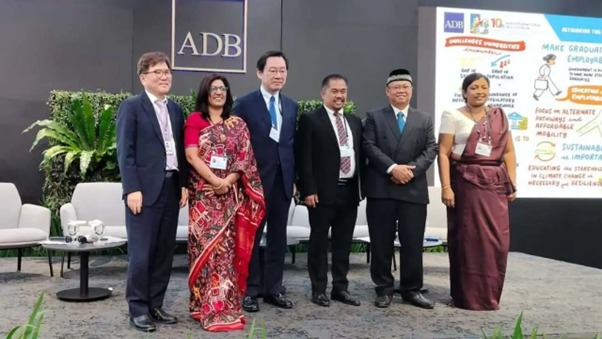
- 10th ADB INTERNATIONAL SKILLS FORUM: A New Era of Digitalized and Climate Resilient Human and Social Development
The forum is ADB’s flagship event in the education sector, which brings together more than 100 government officials and global education experts from more than 30 countries. Prof. Ojat Darojat, Rector of UT, spoke in the session “Roundtable of University Presidents/Leaders: Rethinking the Future of Higher Education,” where he discussed the future of higher education that is more responsive to change. Meanwhile, Prof. Paulina Pannen raised the topic “Adopting Tech-inclusive Approaches to Learning Quality, Assessment, and Reforms to Scale-up Education Access,” highlighting the need for a technology-based approach to expand access and quality of education in the digital era.
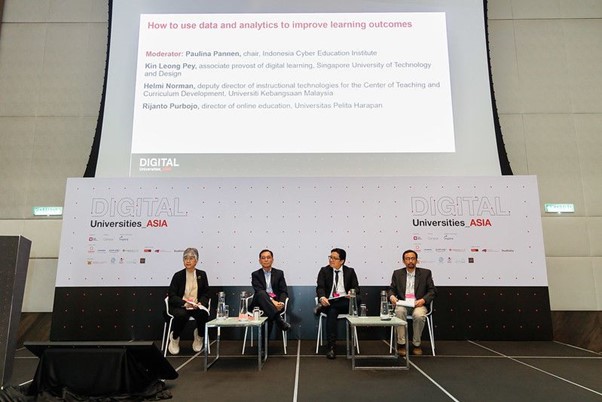
- Times Higher Education Digital Universities Asia 2023 :Discussion panel on “Upskilling Students for the Workforce”
On July 1-3, 2023, Prof. Paulina Pannen was a speaker at the Digital Universities Asia 2023 event held by Times Higher Education. He spoke on “Upskilling Students for the Workforce: Harnessing Microcredentials for More Flexible Pathways,” outlining how microcredentials can be a flexible pathway that prepares students for the challenges of the workforce.
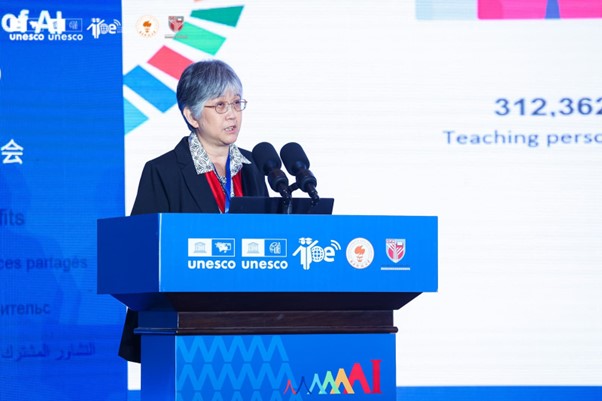
- UNESCO-ICHEI Digital Learning Week 2023 : Parallel Panel on Digital Learning Platforms
Prof. Paulina Pannen was also invited to the Digital Learning Week 2023, organized by UNESCO-ICHEI. As an expert on digital learning platforms, he shared best practices in using public learning platforms to support more inclusive and affordable education in the digital era. This discussion brings together partners worldwide to promote innovation in online learning.
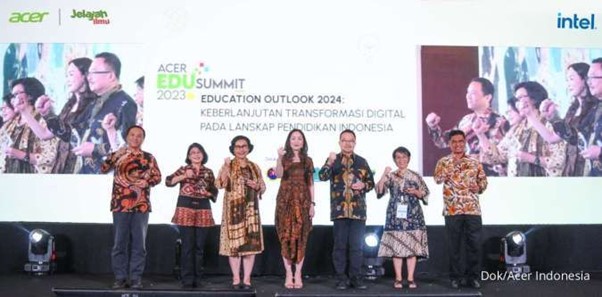
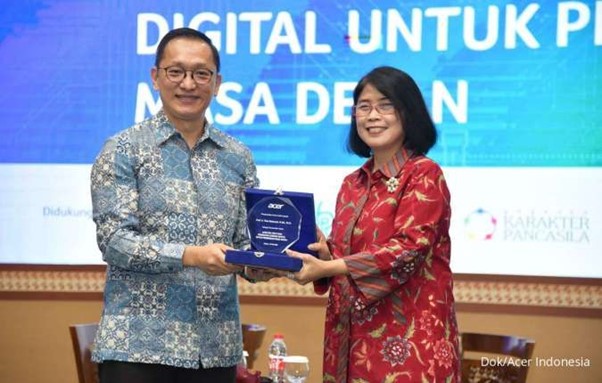
- Acer Edu Summit 2023 : Education Outlook 2023
Prof. Tian Belawati, former Rector of UT, was invited as a speaker at the Acer Edu Summit 2023 with the theme “Sustainability of Digital Transformation in Indonesia’s Education Landscape.” In this conference, Prof. Tian provided insight into the challenges and opportunities of digital transformation in Indonesia and the importance of technology in supporting sustainable education.
- Acer Edu Tech 2023 :Discussion Panel on the Challenges of Digital Literacy and Technology Utilization
In Acer Edu Tech 2023, Prof. Tian Belawati also delivered material on “Challenges in Implementing Digital Literacy for Future Education.” He shared insights on how a modern and inclusive education ecosystem can be formed with digital technology, supporting UT in implementing digital literacy and encouraging innovation in learning.
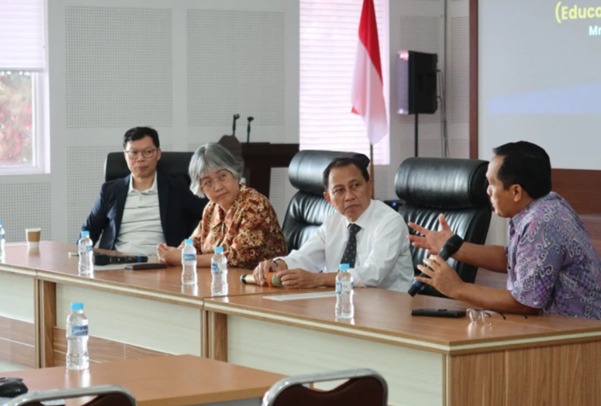
- Visit UGM, ADB Team, and Ministry of Education and Culture to See Research Facilities and Products
Prof. Paulina Pannen, as the Program Manager of PRIME STeP, played a key role in the development and implementation of this program, which involved collaboration between the Asian Development Bank (ADB), the Ministry of Education, Culture, Research, and Technology (Kemendikbudristek), as well as leading universities in Indonesia, including Gadjah Mada University (UGM). During the visit, he led a discussion on the extent to which the program has been implemented and the challenges faced and aimed to deepen understanding related to the impact and development of the project. Prof. Paulina Pannen’s role is crucial in maintaining the smooth implementation of the program, encouraging effective communication between various stakeholders, and ensuring that the main objectives of the PRIME STeP program — namely the downstream development of research and innovation and the establishment of a competitive science and technology ecosystem — can be well achieved.
CROSS-SECTORAL DIALOGUE ABOUT THE SDGS, E.G., CONFERENCES INVOLVING GOVERNMENT/NGOS
Universitas Terbuka (UT) plays an active role in initiating and participating in cross-sectoral dialogue, primarily to support the achievement of the Sustainable Development Goals (SDGs). One of UT’s efforts is to organize international conferences involving governments, non-governmental organizations (NGOs), and academics from various countries to discuss collaborative solutions to issues related to the SDGs.
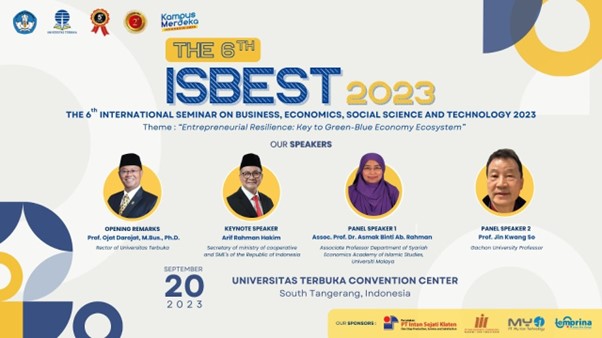
At the 6th isbest-to-ut-support-development-green-and-blue economy/ held on September 20, 2023, UT raised the theme “Entrepreneurial Resilience: Key to The Green-Blue Economy Ecosystem.” The conference focused on the concept of a green and blue economy, which aims to promote sustainable development through the responsible use of natural resources and managing marine resources with sustainability principles. The event was attended by government officials such as the Secretary of the Ministry of Cooperatives and SMEs and international academics from the University Malaya and Gachon University. With 74 papers presented and the participation of more than 300 participants, ISBEST became a cross-sectoral dialogue platform that discussed challenges and opportunities in realizing a green and blue economy ecosystem.
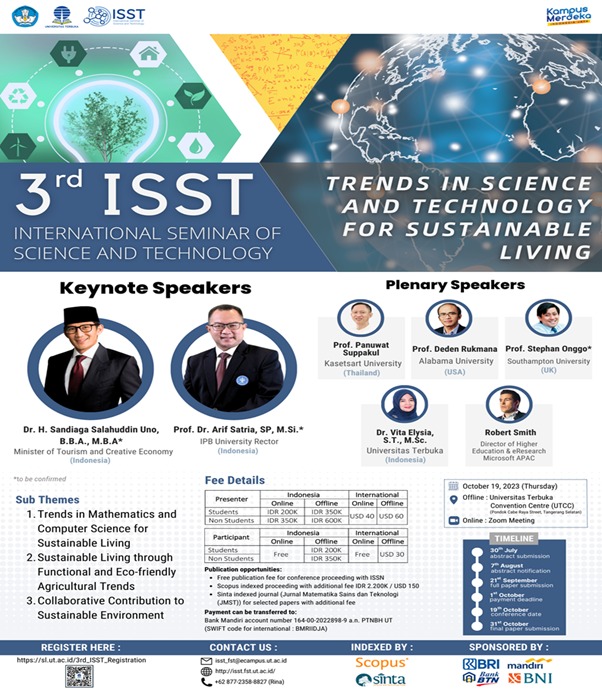
In addition, UT, through the Faculty of Science and Technology, also held The 3rd International Seminar of Science and Technology (ISST) on October 19, 2023, with the theme “Trends in Science and Technology for Sustainable Living.” This seminar invited national figures such as the Minister of Tourism and Creative Economy, Dr. Sandiaga Salahuddin Uno, and academics from various world-renowned institutions. This seminar highlights technology trends and innovations that can support sustainable living. UT also launched the book “Trends in Science and Technology for Sustainable Living,” which contains 20 academic articles on scientific solutions to global challenges.
INTERNATIONAL COLLABORATION ON GATHERING OR MEASURING DATA FOR THE SDGS
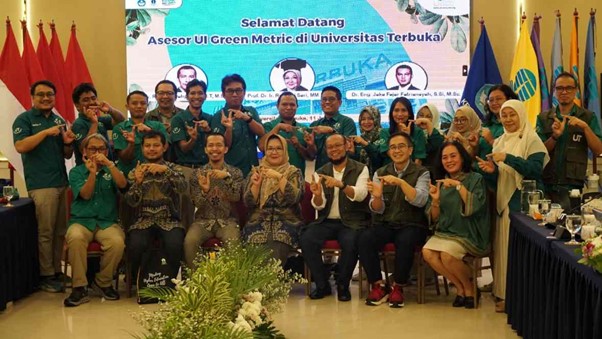
Universitas Terbuka (UT) actively participates in international collaborations to collect and measure data related to the Sustainable Development Goals (SDGs). One tangible form of such participation is UT’s involvement in the UI GreenMetric World University Rankings. This global initiative focuses on measuring the commitment of universities around the world to sustainable environmental management.
UI GreenMetric is a ranking system developed by the University of Indonesia (UI) and is known internationally as the first university ranking based on a commitment to environmental sustainability. Through this collaboration, UT contributes to collecting data on six key indicators: infrastructure management, energy and climate change, waste management, water use, transportation, and education and research related to sustainability.
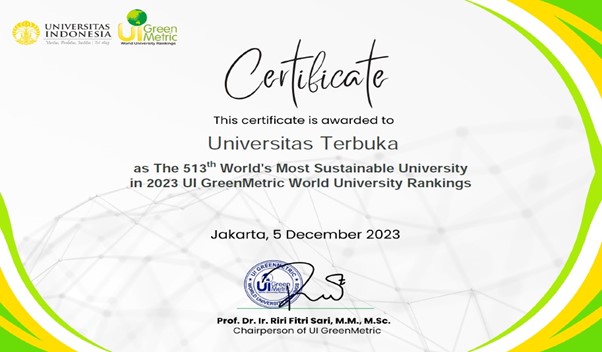
In 2023, UT managed to improve its ranking in UI GreenMetric. Universitas Terbuka obtained the position of 46th World’s Most Sustainable University in Indonesia and 513th World’s Most Sustainable University globally, a significant increase from the previous ranking. This award emphasizes UT’s role in advancing campus environmental management and its commitment to achieving the SDGs targets.
UT’s participation in UI GreenMetric strengthens international collaboration and demonstrates UT’s seriousness in measuring and improving sustainability practices, which directly contributes to global data collection related to the SDGs. Evidence of this involvement can be found in articles and publications that reflect UT’s achievements in the UI GreenMetric ranking.
INTERNATIONAL BEST PRACTICE ON TACKLING THE SDGS
Universitas Terbuka (UT) actively develops international best practices in addressing the Sustainable Development Goals (SDGs) through research collaborations with various global institutions. One tangible proof of this effort is UT’s participation in the AAOU Staff Exchange Fellowship 2023 program, an initiative of the Asian Association of Open Universities (AAOU). This program was implemented again after being stopped for three years due to the Covid-19 pandemic.
In this series of activities, UT welcomed an international researcher, Dr. Muhammad Ajmal Chaudry from Allama Iqbal Open University (AIOU), Pakistan, who conducted research with UT on “Feasibility of Blockchain Technology for Open Distance Learning at Universitas Terbuka.” This research is a collaboration with Dr. Adhi Susilo, M.Biotech from the Faculty of Science and Technology UT, and lasted for two weeks in August 2023.
This collaboration aims to explore the application of blockchain technology in distance education, an innovative approach that has great potential to support the achievement of the SDGs in the field of quality and inclusive education. Through this activity, the two universities exchanged experiences, approaches, and best practices that can be applied internationally.
The program broadens the researchers’ horizons and helps UT adopt a comparative approach to developing sustainable solutions for distance education. The positive impact of this collaboration strengthens UT’s role in international research that contributes to the SDGs and demonstrates how cross-country collaboration can foster innovation and best practices in the management of technology-based education.
COLLABORATE WITH NGOS TO TACKLE THE SDGS
Universitas Terbuka is very committed to integrating the SDGs into academic policy. UT ensures that all students are equipped with relevant knowledge and skills that can be applied to address global challenges. This commitment is reflected in the curriculum of the study program, which has combined the SDGs agenda in various disciplines through the curriculum of the study program.
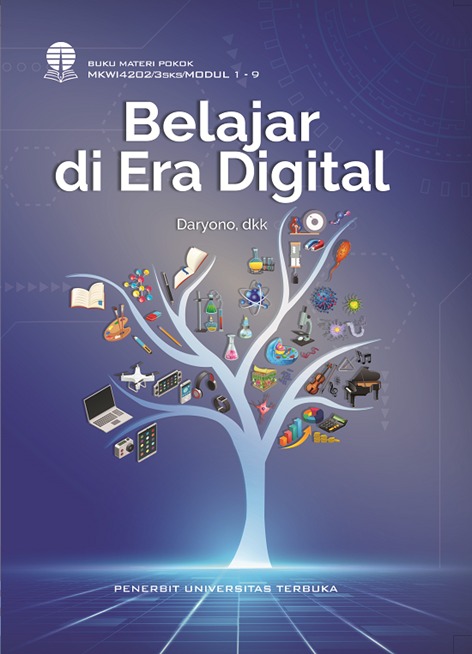
One of the core courses that every student must take is Learning in the Digital Era. This course contains concepts, theories, and practical knowledge related to the development of higher education in the 21st century, especially regarding lifelong learning and basic literacy skills. In the context of learning in the digital era, open education is very relevant because it is based on the culture of knowledge sharing, which is society’s culture in the digital era.
For example, the Urban and Regional Planning Study Program addresses sustainable cities and communities (SDG 11), while the Tourism Study Program emphasizes responsible consumption and production (SDG 12) and sustainable tourism practices. The Development Economics Study Program and the Law Study Program integrate SDG goals that focus on reducing disparities (SDG 10) and ensuring peace, justice, and strong institutions (SDG 16). In our Food Technology, Agribusiness, and Biology Education programs, students explore themes related to zero hunger (SDG 2), life underwater (SDG 14), and life on land (SDG 15), with a focus on sustainable agriculture, food security, and biodiversity conservation. Through this multidisciplinary approach, we ensure that the SDGs’ principles are theoretical, actionable, and applicable to various fields of study, preparing our students to become agents of change in their respective sectors.
COMMITMENT TO MEANINGFUL EDUCATION AROUND THE SDGS ACROSS THE UNIVERSITY
UT is strongly committed to supporting the Sustainable Development Goals (SDGs) by integrating education on sustainability throughout its academic activities and curriculum. Through various programs and seminars involving students and the academic community, UT strives to build awareness of the importance of maintaining ecological, social, and economic balance for a sustainable future
UT shows its commitment to providing education about the SDGs to students by holding an international seminar themed “Trends in Science and Technology for Sustainable Living.” This seminar invited national figures, such as the Minister of Tourism and Creative Economy, Dr. Sandiaga Salahuddin Uno, to share their views on sustainability. Through this activity, UT educates students about the importance of science and technology in achieving SDG goals and encourages them to build a sustainable future actively.
In addition, UT also offers courses that support the achievement of sustainable global goals. This course is designed for students to understand and engage in sustainability efforts so that they not only gain knowledge but also practical insights to contribute to the achievement of the Sustainable Development Goals (SDGs) in society.
COURSES (FULL DEGREES OR ELECTIVES) THAT ADDRESS SUSTAINABILITY AND THE SDGS
UT has integrated the Sustainable Development Goals (SDGs) into every course offered as a university whose main mandate is to educate the nation’s life. This aims to ensure that UT graduates have academic knowledge, awareness, and skills to support the achievement of the SDGs. The SDGs covered in the courses offered cover various topics that contribute to the achievement of global goals, such as:
SDG 10: Reduced Inequalities – Promote social, economic, and political inclusion for all people, regardless of age, gender, disability, race, ethnicity, origin, religion, or other economic status, to reduce inequality.
SDG 8: Decent Work and Economic Growth – Supporting inclusive and sustainable economic growth, workforce productivity, and creating decent jobs for all.
SDG 9: Industry, Innovation, and Infrastructure – Develop sustainable infrastructure, encourage inclusive industrialization, and advance innovation to support the economy and people’s welfare.
SDG 1: No Poverty – End poverty in all its forms worldwide, ensuring everyone has access to essential resources such as food, water, and shelter.
SDG 4: Quality Education – Provide inclusive and quality education for all and promote lifelong learning opportunities so everyone can contribute to society.
SDG 2: Zero Hunger – End hunger, achieve food security, improve nutrition, and support sustainable agriculture for global prosperity.
SDG 5: Gender Equality – Achieve gender equality and empower all women and girls through the eradication of gender-based discrimination and violence.
By integrating the SDGs into the curriculum, UT is committed to producing graduates who are competent in their fields and agents of change who support the achievement of sustainable development goals for the nation’s and the world’s progress.
OUTREACH EDUCATIONAL ACTIVITIES FOR THE WIDER COMMUNITY The Role of Universitas Terbuka in Education for Indonesian Migrant Workers
As a university that implements an open and distance system, UT has a mission to provide access to quality higher education for all levels of Indonesian society, including migrant workers abroad. With an online and flexible learning model, UT is committed to meeting the educational needs of Indonesian migrant workers spread across various countries.
Through a distance learning approach, UT allows migrant workers with limited time and access to continue their higher education without leaving their jobs. The program is supported by a learning system accessible anytime and anywhere, allowing them to learn according to their free time and work constraints.
In addition, UT also collaborates with various agencies and communities of migrant workers in destination countries to provide information and administrative and academic support. For example, UT holds community learning centers and seminars for Indonesian migrant workers, which aim to make it easier for them to follow the learning process and obtain information related to the study programs offered.
Through technology support and a commitment to creating inclusivity in education, UT provides opportunities for migrant workers to develop their potential and improve the quality of life for them and their families in the country. By obtaining higher education, it is hoped that they can have better skills for career advancement abroad and when returning to Indonesia.
This role is part of UT’s contribution to supporting the achievement of the Sustainable Development Goals (SDGs), especially in quality education, reducing inequality, and empowering people wherever they are. UT is committed to expanding the reach and quality of its services so that higher education is accessible to all Indonesian citizens, including those abroad.
UT Collaborates with PIK 2 in the Implementation of Community Service
The cooperation carried out by UT is with the industry, one of which UT collaborates with PT. Kukuh Mandiri Lestari (PIK 2) on April 17, 2023 to carry out Community Service (PkM) activities.
On this occasion, the Rector of UT, Prof. Ojat Darojat, M.Bus., Ph.D., said that UT has an advantage in the world of higher education, namely, UT is designed by the government to provide access to higher education to the entire community through distance learning. He added that UT currently reaches around 440 thousand active students across 514 districts/cities throughout Indonesia. He stated that the collaboration could positively impact access to higher education for the community and employees within PT Kukuh Mandiri Lestari (PIK 2), located in Teluknaga and Kosambi Districts. He also hopes that Teluknaga District, a UT-assisted village in its community service program, can be accelerated in higher education.
President Director of PT Kukuh Mandiri Lestari (PIK 2) Lieutenant General TNI (Mar) (Ret.) Dr. Nono Sampono, S.Pi., M.Si., also expressed his appreciation for the excellent cooperation established by the two parties. UT and property companies (PT Kukuh Mandiri Lestari – PIK 2) have the same responsibility regarding community service. He felt that his party had an obligation to empower the community, including around PIK 2. Dr. Nono Sampono also hopes that with this collaboration, UT will improve human resources while utilizing the potential of natural resources around PIK 2 through various research as a university with capabilities in this field.
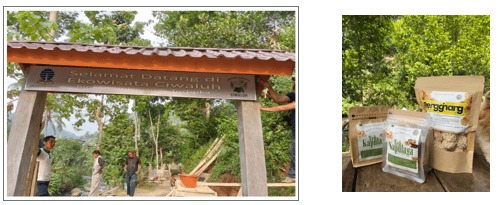
One of the Community Service (PkM) activities carried out by UT in 2023 is the Fostered Village Program. This program is carried out in five villages, namely: (1) Ciwaluh Village, Wates Jaya Village, Cigombong District, Bogor Regency, (2) Tegal Village, Kemang District, Bogor Regency, (3) Situ Udik Village, Cibungbulan District, Bogor Regency, (4) Tonjong Village, Tajurhalang District, Bogor Regency, and (5) Muara Village, Teluk Naga District, Tangerang Regency.
PkM activities of the Assisted Villages in each village are carried out in collaboration and integrated by all faculties. Starting from needs analysis, solution design, design, and implementation of programs are carried out by experts and lecturers according to their scientific fields, with a scientific and technological approach while still considering local wisdom. Each team consists of 5 lecturers and 2-3 students.
The benefits of the program felt by the partners were explained by lecturers from the four faculties, namely the Faculty of Economics and Business (FEB), the Faculty of Law, Social Sciences, and Political Sciences (FHISIP), the Faculty of Science and Technology (FST), and the Faculty of Teacher Training and Education (FKIP). The presentation was not only about the continuity of the activity but also about the obstacles and challenges faced by the lecturers during the activity.
UT Shares Blessings in Serang City
On July 1, 2023, UT held a Mass Circumcision activity titled “UT Cares for Building a Healthy Generation for Indonesia.” This mass circumcision activity is a form of UT’s concern to make it easier for the community to accelerate the implementation of one of the sharia of Muslims, realizing a healthier and righteous generation. This Mass Circumcision is a routine activity and is part of the event to revitalize the 39th Anniversary of Universitas Terbuka. For 2023, the event will usually be held at the UT Polyclinic in Central UT, Pondok Cabe, South Tangerang. This time, it penetrated the UT Region at the UT Serang Office.
The Director of UT Serang also reported that the number of circumcised children was 100 children. The UT Polyclinic deployed its team for the smooth and comfortable operation of children who will be circumcised.
According to UT Chancellor Prof. Ojat Darojat, M.Bus., Ph.D., this mass circumcision is the first activity held at UT Regional, where this time, it was selected at UT Serang. This Mass Circumcision is focused on reaching more people in need in the Banten area. The Rector hopes that with this activity, UT will be more beneficial for Indonesian children wherever they are.
To implement the Tridharma of higher education Community Service (PkM). The D-III Taxation Study Program carried out a Community Service activity entitled “Training on Digital Content Creation Using Social Media and Tax Inclusion in Students of SMK Negeri 24 East Jakarta to Meet the Needs of the Industrial World”.
By the title of PkM, the existence of this PkM activity hopes to help increase the capacity and open the horizons of SMKN 24 Jakarta students related to the creation of social content and tax awareness by synergizing with the soft skills of students needed in facing the industrial world through assistance provided by lecturers of the D-III Taxation Study Program by their fields and competencies. SMKN 24 Jakarta has five majors: Hospitality, Software Engineering, Catering, Fashion, and Tourism Business. The potential of SMKN 24 is enormous because, based on the survey results of the tracer study conducted by SMKN 24 Jakarta, most graduates are working in their fields of competence, followed by continuing their education to college and entrepreneurship.
In commemoration of National Teacher’s Day in 2023, The 1st International Conference on Teaching and Learning (ICTL I) and the XV National Scientific Meeting of Teachers (TING) by the Faculty of Teacher Training and Education, Universitas Terbuka (FKIP-UT) with the theme Future Challenges and Opportunities in Teaching and Learning have been held.
The keynote speaker at this event was Prof. Dr. Nunuk Suryani, M.Pd. as the Director General of Teachers and Education Personnel (GTK) at the Ministry of Education and Culture, who also presented panelists from several countries, namely Prof. David Kaufman – Simon Fraser University, Canada, Dr. Randeep Sudan – Career Digital, Platform Specialist, ADB, Singapore, Dr. Wesley Teter – Senior Consultant for Educational Innovation and Skill Development, UNESCO, Bangkok) and Prof. Ir. Tian Belawati, M.Ed., Ph.D. – Universitas Terbuka, Distance Education expert).
In his speech, the 1st ICTL and TING XV chairman, Andi Sapta, said, “The International Conference on Teaching and Learning and the National Scientific Meeting of Teachers will be a precious platform for discussing and exchanging ideas. Through the event, brilliant views from prominent speakers shared their knowledge and insights,
Director General of GTK, Prof. Nunuk, revealed that the government’s primary program for teachers is PPPK. The government is trying to ensure that ASN teachers teach all study groups and subjects in public schools. He said, “This is a major government program for educators (teachers), namely improving teacher welfare by appointing ASN PPPK, teacher professional education (PPG), teacher governance, teacher driving programs, and others”. He added that the Ministry of Education and Culture ensures that the selection process runs well and helps provide supporting data for the Ministry of Finance to formulate a PPPK teacher financing policy. This includes helping teachers prepare to participate in the selection by providing independent or online training using a learning management system (LMS).
UT Palembang Disaster Care Movement
UT Palembang, through the UT Palembang Girls Association, carried out a Social Service Activity. This activity was a movement of UT Palembang students’ concern for the flood disaster in Lahat Regency some time ago. By distributing assistance to victims affected by the disaster in Lahat Regency. (Monday/20/03/2023).
17.2 Relationships with NGOs, Regional and National Government
UT Dorong Kebijakan Nasional SDG Melalui Talenta Green Jobs
31 Oktober 2024
Universitas Terbuka (UT) kembali menegaskan posisinya bukan hanya sebagai institusi pendidikan tinggi yang menjangkau seluruh penjuru negeri, tetapi juga sebagai mitra strategis yang memberikan masukan langsung kepada kebijakan pemerintah nasional, khususnya dalam menjawab tantangan keberlanjutan global. Baru-baru ini, UT, melalui Lembaga Penelitian dan Pengabdian kepada Masyarakat (LPPM), bersinergi dengan Direktorat Jenderal Pembinaan Penempatan Tenaga Kerja dan Perluasan Kesempatan Kerja (Ditjen Bina Penta dan PKK) Kementerian Ketenagakerjaan (Kemnaker) RI. Kolaborasi strategis ini bertujuan menyiapkan talenta Indonesia yang kompeten, adaptif, berdaya saing, sekaligus bertanggung jawab kepada bumi yang kita tinggali.
Dalam konteks Green Jobs yang merupakan pergeseran menuju efisiensi energi, ekonomi sirkular, dan tata kelola berkelanjutan, UT secara aktif memposisikan diri untuk memberikan input kebijakan di tingkat nasional. Wakil Rektor Bidang Akademik UT menyatakan komitmen melalui Karir Hub UT, UT mengundang pemerintah daerah, industri, dan komunitas untuk bermitra, membuka kelas tamu, dan yang terpenting, memberikan umpan balik kurikulum. Umpan balik kurikulum ini adalah wujud nyata keterlibatan langsung UT dalam memastikan suplai kompetensi lulusan bertemu dengan demand di lapangan kerja hijau. Ini merupakan upaya untuk mengatasi mismatch antara dunia pendidikan dan dunia kerja dengan mengintegrasikan nilai-nilai keberlanjutan ke dalam perjalanan karir para mahasiswa dan alumni. Selain itu, komitmen UT terhadap pelestarian lingkungan juga diwujudkan melalui penerapan konsep Green University.
Melalui tema “Green Jobs, Bright Future,” UT meneguhkan langkah untuk memadukan ilmu, keterampilan, dan nilai-nilai keberlanjutan. Sinergi ini berfungsi sebagai pijakan penting bagi UT dalam menata masa depan dunia kerja Indonesia yang lebih hijau dan berkeadilan bagi semua. Kerja sama ini adalah kontrak moral, memastikan karir masa depan berdaya saing sekaligus berdaya guna bagi bumi.
Judul Berita
TBA
Judul Berita
TBA

Pakistan – 17th October 2024 – The 37th annual conference of the Asian Association of Open Universities (AAOU) officially ends today in Islamabad, with a strong focus on digital transformation, innovative practices, and the future of open and distance education. Held by Allama Iqbal Open University (AIOU), the closing ceremony marks the end of a successful event that gathered educators, policymakers, and renowned innovators from every area. Today’s program started with the keynote speech by Prof. Dr. Zia Ul-Qayyum, Executive Director of the Higher Education Commision of Pakistan. His speech titled “Shaping New Future: Digital Transformation in Higher Education: Leveraging Novel Technologies to Transform Learning and Assessment” covered how recent technology has been sparking revolution in learning and assessment in the digital era. This session was led by Prof Dr. Arshad Saleem Bhatti, Vice Chancelor of Virtual University of Pakistan. Before thr Closing, Dr. Zahid Majeed, Coordinator of Conference, addressed the recommendations concluded from the conference. These recommendations covered discussions and key suggestions from the conference, with the main emphasis on the importance of collaboration and innovation to ensure that open and distance education is accessible, inclusive, and effective.
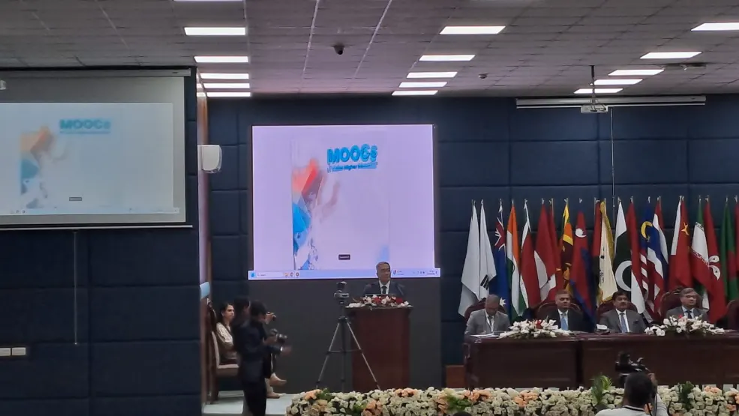
In the closing session, AAOU President – Prof. Ojat. Darojat, Rector of Universitas Terbuka (UT), gave his compliments for the success of the event while promoting talks around important and relevant issues within open and distance learning, especially the role of the continuously advancing technology and its use in the world of education. Prof. Dr. Nasir Mahmood, Vice Chancellor of AIOU, expressed his gratitude towards everyone and shared his optimism towards the improvement of ODL in Asia.
The following Session is continued with the official launch of the book “MOOCs in Asian Higher Education Institutions” by Assoc. Prof. Rahmat Budiman, Ph.D., Secretary General of AAOU. This book, written by 56 writers from 7 Asian countries, summed up the initiative development of MOOCs in Asia, from the early phase until the present.
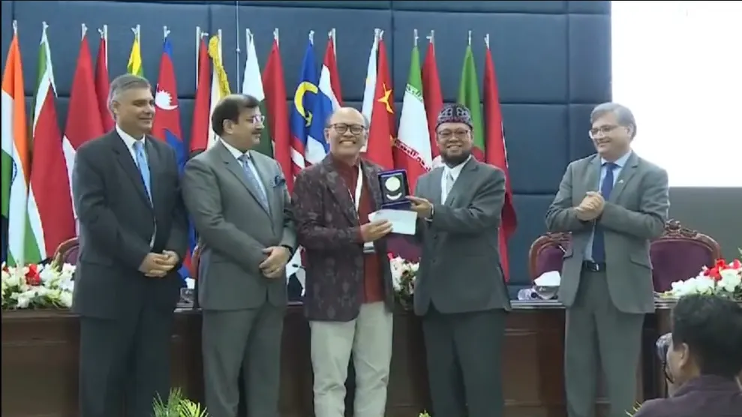
One of the peaks that is long awaited for from the closing ceremony is the announcement of the winners of the AAOU Awards 2024 where UT successfully won 2 awards which acknowledged the amazing contributions of the winners of the following categories:
- Young Innovator Award:
- Gold Medal: Lirong Du and Han Li from Jiangsu Open University, China
- 1st Silver Medal: Nazia Rafiq and Mariam Ahmad from Virtual University of Pakistan
- 2nd Silver Medal: Shabir Ahmed Wani and Khalid Waquar Abid from Indira Gandhi National Open University, India
- Best Practice Award:
- Gold Medal: Arshad Taseen from Bishop’s University, Canada
- 1st Silver Medal: Shawira Abu Bakar, Nooni Ezdiani Yasin, and team from Open University Malaysia
- 2nd Silver Medal:
- Best Paper Award:
- Gold Medal: Sun Chuanyuan from Shanghai Open University and Dr. Chulani Herath from Open University of Sri Lanka
- 1st Silver Medal: Maximus Gorky Sembiring and Sjaiful Munir from Universitas Terbuka, Indonesia
- 2nd Silver Medal: Nurul Hidayah Binti Mohamad Farok from Wawasan Open University, Malaysia
One of the moments that left the most impression was when Dr. Zahid Majeed from Allama Iqbal Open University (AIOU) was awarded the prestigious AAOU Meritotious Service Award. This award is a sincere acknowledgement of Dr. Majeed’s incredible dedication and contribution to the ODL field, where he has given a deep and groundbreaking impact in improving ODL. His unshaken commitment in increasing the quality and accessibility of ODL, along with an incredible service to the AAOU community, made him a deserving recipient for the award.
The conference was closed by the announcement that the 38th annual AAOU Conference will be held in Beijing, China, in 2025. This awaited event will be held by Open University of China, where it’s predicted to be appealing to practitioners, educators, and policymakers within the world of ODL. While the delegates are waiting for this meeting, the conference in 2025 is hoped to be able to continue the momentum from this year’s achievements, further develop the field of ODL, and push collaborations in every area.
5 Desember 2024
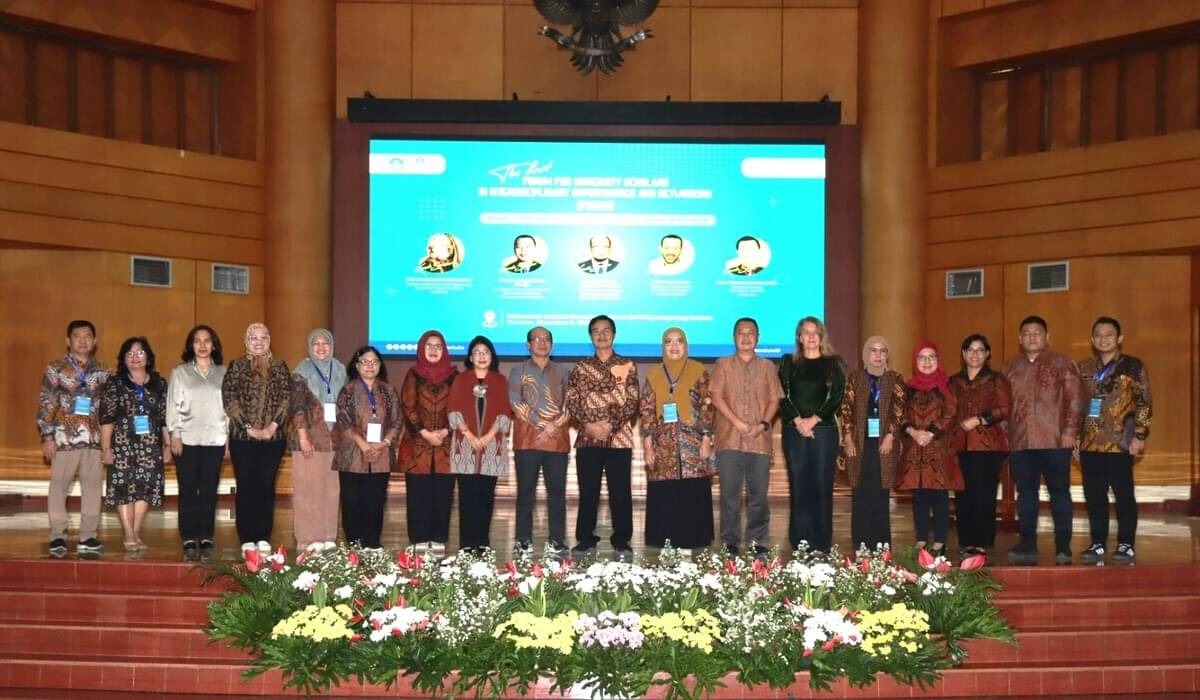
UNIVERSITAS Terbuka (UT) melalui Sekolah Pascasarjana (SPs) UT menyelenggarakan seminar internasional inovatif Forum for University Scholars in Interdisciplinary Opportunities and Networking (FUSION) yang pertama. Acara dilakukan secara luring di Universitas Terbuka Convention Center (UTCC) serta daring melalui Zoom dan YouTube pada Kamis (5/12).
Tahun ini, tema yang diangkat adalah “Research Methodology in VUCA: Navigating Complexity and Diversity”. Tema ini menyoroti bagaimana peran metodologi penelitian dalam membantu menghadapi tantangan dalam dunia yang penuh dinamika dan ketidakpastian. Ia juga membahas solusi untuk mendukung pencapaian Sustainable Development Goals (SDGs), khususnya SDGs4 tentang pendidikan berkualitas untuk semua dan SDGs17 tentang kemitraan untuk mencapai tujuan global.
Forum ini menjadi wadah bagi para sarjana, peneliti, dan praktisi dari berbagai disiplin ilmu dan profesional untuk bertukar ide, berdiskusi tentang tantangan terkini, serta merancang pendekatan inovatif demi tercapainya pendidikan yang inklusif dan berkualitas. Direktur Sekolah Pascasarjana UT, Maman Rumanta, menyebut kegiatan ini merupakan salah satu upaya UT menuju universitas kelas dunia (world class university). Melalui penyelenggaraan FUSION, UT ingin mendorong para mahasiswa terutama S2 dan S3 untuk bisa mengikuti seminar nasional dan internasional. “Ini adalah salah satu untuk mewadahi mahasiswa-mahasiswa yang kita wajibkan untuk melakukan seminar internasional,” kata Maman dalam konferensi pers di sela-sela kegiatan.
Ia menyebut kegiatan yang mengkolaborasikan berbagai disiplin ilmu ini cukup membanggakan dengan turut menampilkan perwakilan dari universitas luar negeri. Maman juga memastikan FUSION hanyalah salah satu seminar internasional yang digagas UT dalam rangka menuju universitas kelas dunia.
“Kalau FUSION kan interdisiplin, jadi berbagai disiplin ilmu kita hadirkan di sini. Sedangkan nanti untuk prodi-prodi tertentu juga biasa akan melakukan seminar internasional sesuai dengan keperluannya masing-masing,” jelasnya. Dalam debut perdananya, FUSION melibatkan 18 perguruan tinggi negeri dan swasta sebagai co-host. Dari 18 perguruan tinggi ini, sebanyak 156 pemakalah akan bergabung baik secara luring maupun daring. Melalui inisiatif ini, para peserta berkesempatan terlibat dalam diskusi kolaboratif yang memperkuat kemitraan akademik serta membuka jalan bagi penelitian interdisipliner. Sebagai apresiasi terhadap kontribusi akademik terbaik, FUSION 2024 memberikan penghargaan kepada enam best paper dan tujuh best presenter.
Ada dua sesi diskusi panel yang dihadirkan pada kegiatan FUSION. Sesi pagi dipandu oleh A. Hadian Pratama Hamzah. Dua pembicara sesi ini adalah Harjum Muharam dari Fakultas Ekonomika dan Bisnis Universitas Diponegoro, serta Amanda Reichelt-Brushett dari Faculty of Science and Engineering Southern Cross University Australia. Sementara pada sesi diskusi panel siang dimoderatori oleh Bachtiar dan menghadirkan tiga pembicara. Mereka adalah yaitu Mohd. Na’eim Bin Ajis dari College of Law, Government & International Student Universiti Utara Malaysia, Oscar Odena dari School of Education University of Glasgow serta Maman Rumanta dari Sekolah Pascasarjana Universitas Terbuka. Pada kesempatan yang sama, Harjum memaparkan bahwa VUCA (volatility, uncertainty, complexity, and ambiguity) yang menjadi aspek dalam tema FUSION ini menuntu adaptasi dari kondisi yang serba tak pasti. Dampak dari ketidakpastian ini, katanya, menyasar berbagai bidang. Untuk itu upaya kolaboratif melalui riset interdisiplin perlu dilakukan. “Tindakan satu pihak itu akan berpengaruh dengan pihak-pihak yang lain. Riset-riset yang seperti itu semakin menarik, semakin dibutuhkan, dan menantang,” kata Harjum.
Ketua Panitia FUSION 2024 Astri Dwi Jayanti Suhandoko menyebut artikel yang dipresentasikan tidak hanya dari Indonesia, tapi juga beberapa negara seperti Nigeria, Malaysia, Chechnya, dan lain-lain. “Harapan kami di tahun depan lebih banyak lagi teman-teman akademia dari luar Indonesia ikut bergabung dan mempresentasikan makalahnya,” katanya.
Selain FUSION, Hari ini UT juga melakukan penandatanganan Memorandum of Understanding (MoU) dengan Universitas Darul Ulum Islamic Centre Sudirman GUPPI. Penandatanganan MoU itu perihal Pelaksanaan Tri Dharma Perguruan Tinggi dan Merdeka Belajar Kampus Merdeka (MBKM). Selain itu, terdapat tiga mitra yang menandatangani Memorandum of Agreement (MoA) dengan UT yaitu Universitas Batanghari Jambi, Universitas Bale Bandung, dan Universitas Putra Bangsa
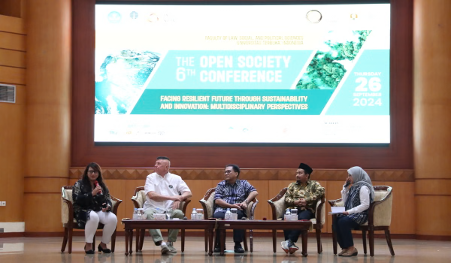
Open Society Conference 2024 UT, Ulas Tantangan Hadapi AI
26 Juli 2024

KONFERENSI tahunan Open Society Open atau OSC kembali diselenggarakan Fakultas Hukum, Ilmu Sosial, dan Ilmu Politik (FHISIP) Universitas Terbuka (UT). Konferensi tersebut telah diselenggarakan sebanyak lima kali, mulai dari konferensi nasional dan kemudian meningkat skalanya menjadi konferensi internasional. Tahun ini, FHISIP UT berkolaborasi dengan Universitas Jember, Universitas Negeri Semarang (UNNES), dan Universitas Pembangunan Nasional Veteran Jakarta (UPN VJ) dalam menyelenggarakan OSC.
OSC yang keenam ini diselenggarakan secara hybrid di Universitas Terbuka Convention Center (UTCC), Tangerang Selatan, Banten, melalui Zoom Meeting, dan live streaming di Youtube UT-TV.
Mengusung tema, “Facing Resilient Future Through Sustainability and Innovation: Multidisciplinary Perspectives”, Dekan FHISIP UT, Meita Istianda, mengutarakan konferensi internasional ini diharapkan dapat memberikan wawasan serta kontribusi nyata bagi masyarakat. Khususnya dalam menghadapi tantangan masa depan, dalam mewujudkan inovasi yang berkelanjutan berbasis perspektif multidisiplin.
“Konferensi ini menjadi wadah bagi para akademisi dan mahasiswa UT untuk menyebarluaskan penelitiannya. Tidak hanya itu, pada konferensi ini juga mengundang pembicara dari akademisi maupun praktisi profesional untuk berbagi dan bertukar pengetahuan khususnya pada bidang keilmuan terkait,” ungkap Meita Istianda.
Dalam kesempatan itu, Meita Istianda mengutarakan tantangan masa depan dengan kemajuan teknologi dengan keberadaan kecerdasan buatan atau Artificial Intelligence (AI). Katanya, AI selain menjadi tools yang dapat mempermudah berbagai kegiatan manusia, juga dapat dimanfaatkan secara negatif. Ia mencontohkan dalam proses ujian atau tugas-tugas yang diberikan oleh universitas atau program studi (prodi), kalangan mahasiswa ada yang terkadang memanfaatkan AI dengan tidak bertanggung jawab. “Misalnya dia mengerjakan tugas menggunakan ChatGTP tanpa diolah kembali, tanpa dikaitkan dengan konsep atau teori yang seharusnya. Itu menjadi keterampilan dia atau skill dia kadang-kadang mentah,” ungkap Meita.
Juga dalam pembuatan artikel bagi mahasiswa yang diwajibkan untuk membuat karya ilmiah. “Nah, ini ada saja indikasi indikasi seperti itu, sehingga kita juga memerlukan edukasi untuk mahasiswa dalam penggunaan AI yang baik yang sesuai dengan ketentuan,” tukasnya. Contoh lain lagi, kata Meita, dalam kampanye yang tengah marak saat ini, kemungkinan terjadinya black campaign atau kampanye negatif yang diproduksi lewat AI juga besar. “Jadi para akademisi atau para ilmuwan, jangan monodisiplin lagi, tetapi multi disiplin dengan mempelajari trend trend yang ada di masyarakat,” tuturnya.
Ketua Pelaksana OSC ke 6 UT, Yonarisman Muhammad Akbar, menambahkan tema OSC kali ini dipilih sesuai dengan kondisi dunia yang terus berubah dan dinamis. “Bagaimana cara kita menghadapi AI kedepannya dengan ketidakpastian yang terus berlanjut di setiap zaman. Bagaimana lima tahun atau 10 tahun kedepannya? Apa yang akan terjadi maka kita mesti hadapi dengan kesiapan resiliensi yang mesti dihadapi,” tuturnya.
OSC ke 6 UT dihadiri para narasumber antara lain, Aruminingsih, dari BAPPENAS RI, Prof. Valerii Leonidovich Muzykant selaku Department of Mass Communication of RUDN University Rusia, Prof. Daryono, dari Universitas Terbuka dan Ainun Najib selaku Data & AI Profesional sebagai Keynote Speaker.
17.4 Education for the SDGs
Actualizing SDGs Through Concrete Action, UT Held The 4th ISST!
The Sustainable Development Goals (SDGs) represent a global vision for peace, prosperity, and the future of development. In an effort to support the achievement of the SDGs, Universitas Terbuka (UT), through the Faculty of Science and Technology (FST), organized The 4th International Seminar of Science and Technology (ISST) on October 17, 2024. ISST is an annual event organized by FST, serving as a platform for the academic community to disseminate academic products in the fields of science and technology in line with the predetermined theme. This year’s international seminar, with the theme “Innovations in Science and Technology to Realize Sustainable Development Goals,” became an important platform for sharing innovations in science and technology, while also demonstrating UT’s commitment to realizing the SDGs.
This hybrid seminar was attended by around 117 presenters, with 45 attending in person at the Universitas Terbuka Convention Centre (UTCC) and 72 attending virtually via Zoom, with the event streamed live on Universitas Terbuka’s YouTube channel. The event was opened by UT Rector, Prof. Ojat Darojat, M.Bus., Ph.D., who delivered a virtual speech, expressing appreciation to FST for organizing The 4th ISST. He emphasized that this seminar is a tangible step by UT in supporting the SDGs, particularly through research and innovation relevant to global needs. This aligns with the seminar’s objective of encouraging academics to continuously contribute to science and technology.
Dr. Mohamad Yunus, M.A., Vice Rector for Academic Affairs, representing the Rector, further explained that this event aims to foster dedication among faculty members within and outside UT to produce valuable outputs that can enhance their scientific standing. “The hope is that new contributions will be made to science and technology that will continue to develop and improve, strengthening the presence of scientific research within the Ministry of Education, Culture, Research, and Technology,” added M. Yunus.
This international seminar invited the Directorate General of Higher Education, Research, and Technology, represented by Prof. Dr. rer. nat. Abdul Haris, M.Sc., with Prof. Dr. Ir. M. Faiz Syuaib, M.Agr., Director of Research, Technology, and Community Service, in attendance. The seminar also featured speakers from prestigious educational institutions, with George Xu from H3C China and Dr. Pismia Silvy, S.Si., M.Si. from UT’s Statistics Program, FST, speaking in person at UTCC. Additionally, virtual speakers included Paul Burton from Griffith University, Australia, and Dr. Yury Bukhman from the Morgridge Institute for Research, USA.
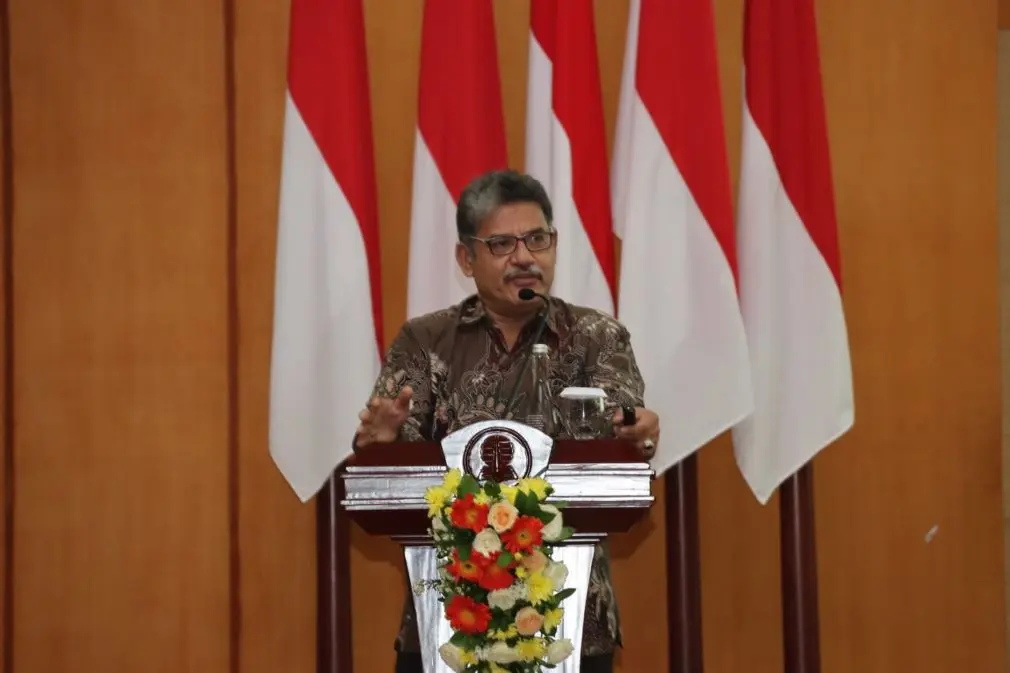
On the same occasion, the Director of Research, Technology, and Community Service (DRTPM) at the Ministry of Education, Culture, Research, and Technology, Prof. Dr. Ir. M. Faiz Syuaib, expressed his appreciation for this event and commended ISST, which is held annually by UT, as a positive and beneficial tradition. According to him, universities are at the forefront of a nation’s progress. “This annual ISST event at UT is certainly a good tradition. Nowadays, we cannot avoid technology, and technology cannot be produced or used if we do not understand it. Universities are at the forefront. No country or nation can progress if its universities do not advance,” emphasized Prof. Faiz Syuaib.
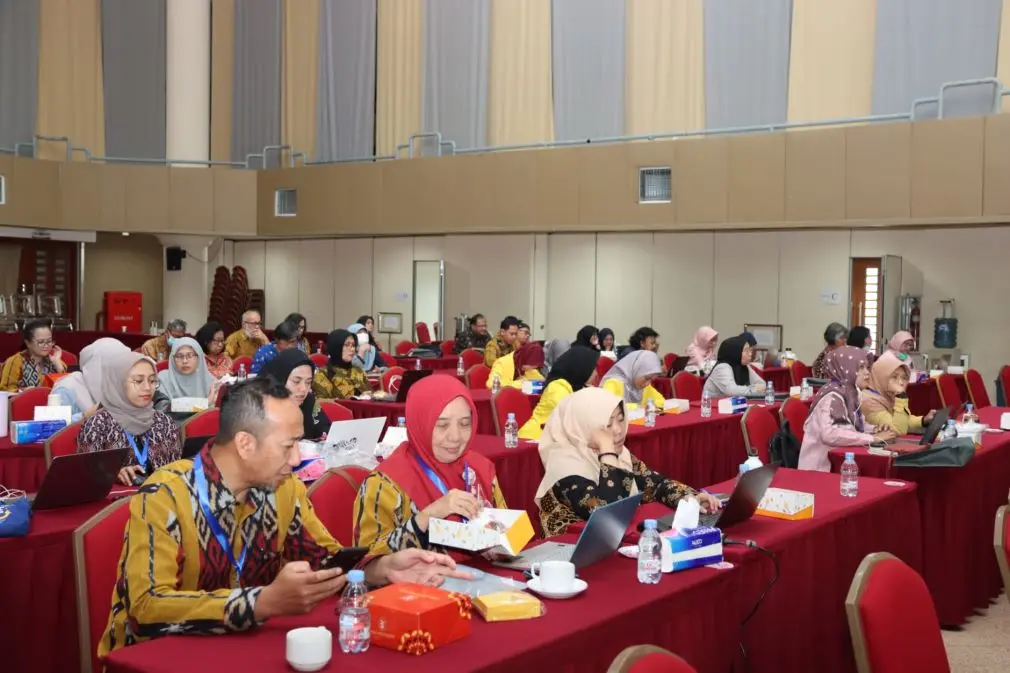
Prof. Faiz further explained that building a good university reputation must begin with research achievements and technological advancements, both in terms of quantity and quality, accompanied by information dissemination and the publication of research products to gain recognition. “Reputation is the highest achievement. Reputation is built because we have the numbers, we have the quality, and we are visible to others. Then, people acknowledge us. Researchers would never know what others are doing without meeting each other,” he added.
Prof. Faiz also emphasized that UT is an extraordinary asset in terms of its history, skills, and contemporary relevance. Given the vastness of Indonesia, it is impossible to develop the same inventions or discoveries in every region. “With research and technology, we should be able to solve our problems, and learning technologies will help shape what needs further research in the future,” said Prof. Faiz.
Dedicated SDGs Courses
4 September 2024
UT has integrated the Sustainable Development Goals (SDGs) into every course offered as a university whose main mandate is to educate the nation’s life. This aims to ensure that UT graduates have academic knowledge, awareness, and skills to support the achievement of the SDGs. The SDGs covered in the courses offered cover various topics that contribute to the achievement of global goals, such as:
- SDG 10: Reduced Inequalities – Promote social, economic, and political inclusion for all people, regardless of age, gender, disability, race, ethnicity, origin, religion, or other economic status, to reduce inequality.
- SDG 8: Decent Work and Economic Growth – Supporting inclusive and sustainable economic growth, workforce productivity, and creating decent jobs for all.
- SDG 9: Industry, Innovation, and Infrastructure – Develop sustainable infrastructure, encourage inclusive industrialization, and advance innovation to support the economy and people’s welfare.
- SDG 1: No Poverty – End poverty in all its forms worldwide, ensuring everyone has access to essential resources such as food, water, and shelter.
- SDG 4: Quality Education – Provide inclusive and quality education for all and promote lifelong learning opportunities so everyone can contribute to society.
- SDG 2: Zero Hunger – End hunger, achieve food security, improve nutrition, and support sustainable agriculture for global prosperity.
- SDG 5: Gender Equality – Achieve gender equality and empower all women and girls through the eradication of gender-based discrimination and violence.
By integrating the SDGs into the curriculum, UT is committed to producing graduates who are competent in their fields and agents of change who support the achievement of sustainable development goals for the nation’s and the world’s progress.
28 Desember 2024

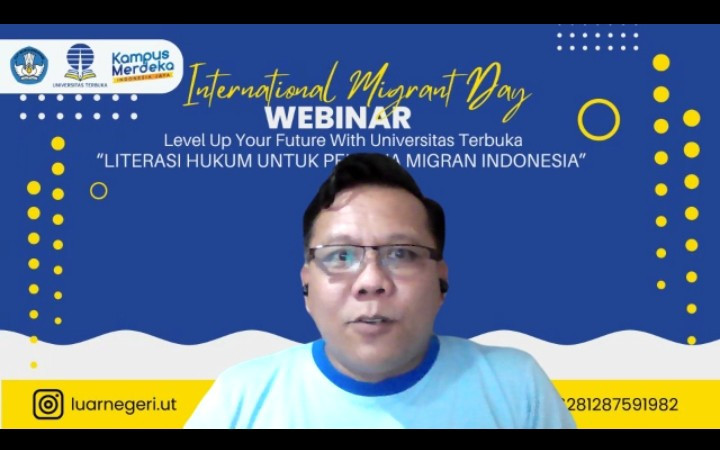
Kegiatan Webinar International Migrant Day bertema “Level Up Your Future with UT” yang diselenggarakan oleh Universitas Terbuka berkontribusi terhadap SDG 8: Pekerjaan Layak dan Pertumbuhan Ekonomi (Decent Work and Economic Growth), khususnya pada indikator pengakuan serikat pekerja bagi semua, termasuk perempuan dan pekerja internasional (Recognise unions for all, including women & international staff). Melalui kegiatan ini, UT dan Kementerian Pelindungan Pekerja Migran Indonesia (KP2MI) menegaskan pentingnya perlindungan hak-hak Pekerja Migran Indonesia (PMI), terutama perempuan, dengan menempuh jalur penempatan resmi dan prosedural. Upaya ini sejalan dengan komitmen global untuk memastikan pekerja migran memperoleh perlakuan yang adil, akses terhadap organisasi pekerja, serta kondisi kerja yang aman dan bermartabat, sehingga mendorong terciptanya pertumbuhan ekonomi yang inklusif dan berkelanjutan.
Keraton Surakarta Gandeng Universitas Terbuka Tingkatkan Literasi Budaya
7 Februari 2024
Dalam rangka meningkatkan implementasi Tri Dharma Perguruan Tinggi serta peningkatan kompetensi sumber daya manusia (SDM), Universitas Terbuka (UT) menjalin kerja sama dengan Keraton Kasunanan Surakarta. UT merupakan lembaga perguruan tinggi terbuka dan jarak jauh terus berupaya memperluas jaringan kerja sama dengan berbagai pihak untu mewujudkan tersediannya akses pendidikan tinggi bagi semua lapisan masyarakat di seluruh penjuru tanah air. Pada hari Selasa (6/2/2024) Universitas Terbuka berkesempatan menghadiri acara Tingalan Dalem Jumenengan Pakubuwono XIII ke 20 di Keraton Surakarta Hadiningrat.
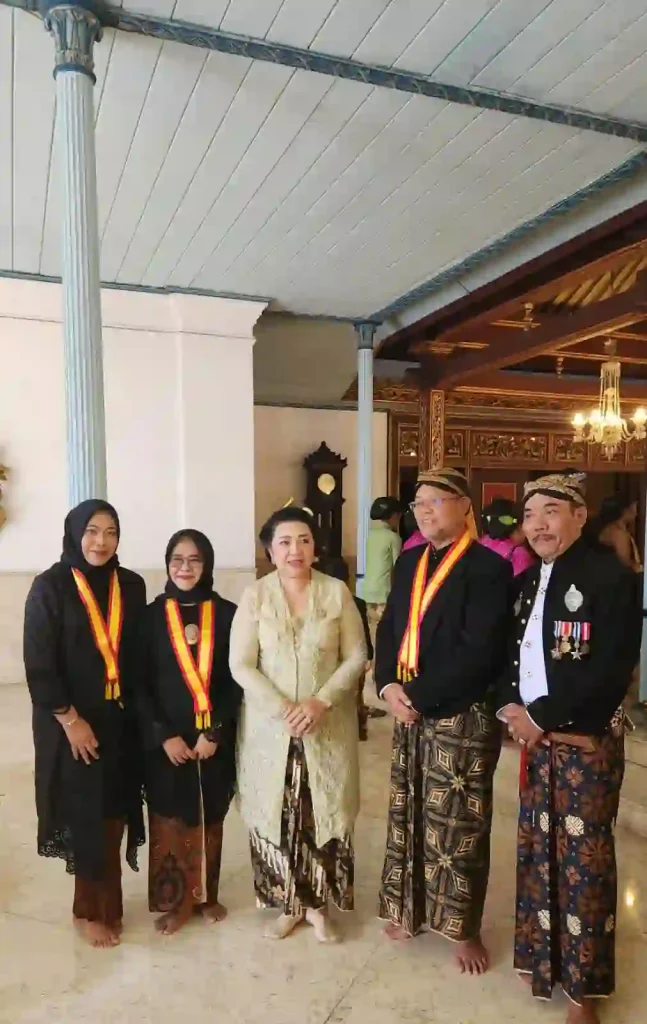
Acara Tingalan Dalem Jumenengan adalah peringatan kenaikan tahta raja. Dalam bahasa Jawa, tingalan berarti peringatan, dalem bermakna panggilan kehormatan untuk raja jawa, dan jumenengan yang berasal dari kata jumeneng dapat diartikan bertahta. Acara dihadiri oleh kerabat kerjaan, abdi dalem serta tamu undangan dari instansi pemerintah maupun kerajaan-kerajaan di Nusantara, tidak hanya tamu lokal tetapi ada pula tamu dari luar negeri. Dalam acara Tingalan Dalem Jumenengan ditampilkan tarian Bedhaya Ketawang. Tarian Bedhaya Ketawang ini sangat sakral dibawakan oleh 9 gadis remaja yang belum menikah serta tarian ini hanya ditampilkan satu tahun sekali saat acara Tingalan Dalem Jumenengan saja. UT berpartisipasi dan berkolaborasi dengan Keraton Surakarta sebagai perwujudan dari pelestarian budaya dan tradisi adat istiadat sebagai salah satu upaya pengembangan kebudayaan Jawa.
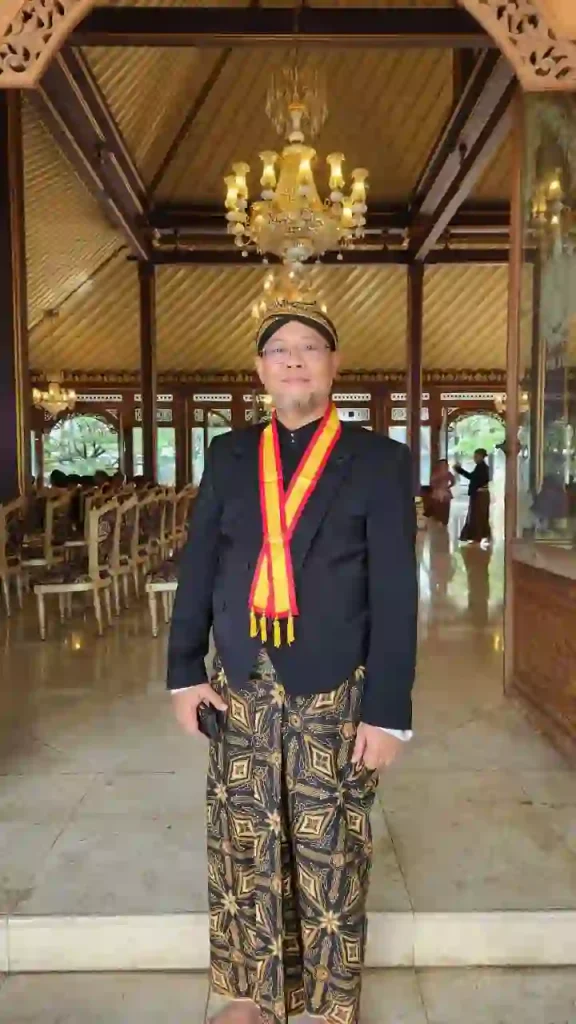
Rektor UT Prof. Ojat Darojat mengungkapkan bahwa hadirnya UT dalam acara Tingalan Dalem Jumenengan ini sebagai upaya untuk saling mengokohkan antara UT dengan Keraton Surakarta Hadingrat serta sebagai bentuk tanggung jawab insan pendidikan dalam rangka pemeilharaan dan pewarisan nilai-nilai budaya luhur Kasunanan Surakarta Hadiningrat. Semakin erat hubungan UT dengan mitra seperti salah satunya Keraton Surakarta Hadiningrat bisa menjadikan pengembangan institusi bersama. Dengan adanya kerja sama yang baik ini memberikan kemudahan atau akses bagi dosen UT dan mahasiswa untuk melakukan kajian riset dan penulisan karya ilmiah, serta menjalani magang sebagai bagian dari implementasi Kampus Merdeka di Keraton
110 Mahasiswa UT Siap Tingkatkan Literasi dan Numerasi Melalui Program Kampus Mengajar Angkatan 7
15 Maret 2024

Beragamnya program-program Merdeka Belajar Kampus Merdeka (MBKM) memberikan wadah bagi mahasiswa dan para stakeholders terkait untuk dapat berkontribusi dan berkolaborasi secara nyata bagi masyarakat, dan salah satunya adalah program Kampus Mengajar. Per-tahun 2024 ini, Kampus Mengajar sudah memasuki angkatan ke-7 (ke-tujuh) dan sudah menghasilkan banyak alumni dari program Kampus Mengajar ini.
Kampus Mengajar merupakan salah satu program Merdeka Belajar Kampus Merdeka (MBKM) yang merupakan kanal pembelajaran yang memberikan kesempatan kepada mahasiswa untuk belajar di luar kampus selama satu semester guna melatih kemampuan menyelesaikan permasalahan yang kompleks dengan menjadi mitra guru untuk berinovasi dalam pembelajaran, pengembangan strategi, dan model pembelajaran yang kreatif, inovatif, dan menyenangkan bagi siswa.
Sebagaimana program MBKM yang lainnya, Kampus Mengajar sangat diminati dan antusiasme dari para pendaftarnya sangat tinggi, terkhusus di UT sendiri. Setelah melewati proses seleksi yang panjang dan ketat, pada akhirnya UT kembali menorehkan prestasi yang gemilang dengan berhasil meloloskan 110 mahasiswa untuk mengikuti Program Kampus Mengajar Angkatan 7 ini. Mahasiswa yang lolos program ini tentunya tersebar dari berbagai fakultas dan program studi pada jenjang S1 dan D4 yang persebarannya sebagai berikut:
- Fakultas Hukum Ilmu Sosial dan Ilmu Politik (FHISIP) sejumlah 23 Mahasiswa
- Fakultas Ekonomi dan Bisnis (FEB) sejumlah 30 Mahasiswa
- Fakultas Sains dan Teknologi (FST) sejumlah 2 Mahasiswa
- Fakultas Keguruan dan Ilmu Pendidikan (FKIP) sejumlah 55 Mahasiswa
Pencapaian yang menggembirakan sekaligus membanggakan ini disampaikan pada saat acara “Sapaan dan Penyamaan Persepsi KM 7 UT” yang diselenggarakan secara daring melalui Zoom Meeting pada hari Rabu, 10 Januari 2024. Acara ini dipandu oleh Uliya Khoirun Nisa, M.Pd. dan dihadiri oleh Dr. Kartono, S.Pd., M.Si. selaku ketua MBKM UT, Dr. Lidwina Sri Ardiasih, S.Pd., M.Ed. selaku koordinator Kampus Mengajar UT, para Wakil Dekan Bidang Akademik, para Wakil Dekan Bidang Kemahasiswaan, Layanan Pembelajaran, dan Kerja Sama, Dr. Heni Safitri, S.Pd., M.Si. selaku Staf Ahli Bidang Inovasi Pendidikan, Direktur dan Penanggung Jawab Akademik dan Kemahasiswaan UT Daerah, Ketua Program Studi (Kaprodi) dari mahasiswa yang lolos dalam program Kampus Mengajar 7, Tim Satuan Tugas (Satgas) MBKM FKIP UT, 110 Mahasiswa yang terpilih dalam mengikuti program Kampus Mengajar 7, serta dua narasumber yaitu Dr. Siti Aisyah, M.Pd. selaku koordinator Kampus Mengajar Angkatan 6 dan Klarisa Fifadila sebagai alumni program Kampus Mengajar Angkatan 6.
Kegiatan ini diawali dengan sambutan yang disampaikan oleh Dr. Lidwina Sri Ardiasih, S.Pd., M.Ed. selaku koordinator Kampus Mengajar di UT. Dalam sambutannya beliau mengucapkan selamat dan sukses kepada 110 mahasiswa UT yang lolos seleksi program Kampus Mengajar Angkatan 7. Selain memberikan ucapan selamat dan apresiasi kepada mahasiswa yang lolos dan terpilih pada program Kampus Mengajar Angkatan 7, beliau juga memberikan apresiasi kepada seluruh pihak terkait yang telah berkontribusi dalam keberlangsungan Kampus Mengajar Angkatan 7. Tidak hanya dari Dr. Lidwina Sri Ardiasih, S.Pd., M.Ed., ucapan selamat dan apresiasi juga disampaikan oleh Dr. Kartono, S.Pd., M.Si. selaku Ketua MBKM UT. Selain dari apresiasi yang diberikan, beliau juga menyampaikan doa dan harapan ke depannya terkait dengan keberlangsungan program Kampus Mengajar, supaya mahasiswa dapat menjalankan program dengan baik dan maksimal agar dapat memberikan manfaat dan dampak serta mahasiswa mendapatkan hasil yang memuaskan.
Setelah disampaikan sambutan dari Koordinator Kampus Mengajar UT dan Ketua MBKM UT, acara dilanjutkan dengan penyampaian terkait kebijakan MBKM Kampus Mengajar (KM) UT yang disampaikan oleh Danang Budi Setyawan, M.Si. Pada sesi ini disampaikan secara singkat mengenai program MBKM yang meliputi tujuan, harapan, serta kebijakan akademik terkait MBKM di UT. Selain itu dijelaskan juga mengenai seputar program Kampus Mengajar yang mencakup konsep program, output dari program, manfaat program, testimoni dari mahasiswa yang sudah mengikuti program, kontribusi mahasiswa, aktivitas selama program Kampus Mengajar 7, dan Linimasa program Kampus Mengajar Angkatan 7. Selanjutnya setelah pemaparan dari Danang Budi Setyawan, M.Si. dilanjutkan dengan pemaparan dari Rhomadhon, S.Pd. terkait alur dan teknis Pelaksanaan MBKM Kampus Mengajar UT. Pada pemaparan ini dijelaskan mengenai alur pelaksanaan selama mengikuti program Kampus Mengajar, mulai dari Registrasi Mata Kuliah dan melakukan pembayaran Mata Kuliah sampai dengan akhir yaitu melakukan konversi mata kuliah sebagai bagian dari rekognisi pelaksanaan program.
Setelah pemaparan materi terkait dengan kebijakan dan teknis pelaksanaan MBKM Kampus Mengajar UT, dilanjutkan dengan sesi sharing session yang disampaikan oleh alumni program Kampus Mengajar Angkatan 6 yaitu Klarisa Fifadila. Pada sharing session ini Klarisa Fifadila membagikan pengalamannya selama Kampus Mengajar Angkatan 6 dan juga tips dan trik dalam mengikuti program Kampus Mengajar. Dalam sharing session-nya, Klarisa menyampaikan beberapa hal penting yang sangat penting untuk mahasiswa tanamkan dan lakukan selama program berjalan yaitu, “Adaptasi, Komunikasi, dan Kerja Sama Tim”. Klarisa menyampaikan pentingnya ketiga hal tersebut, karena dengan diimplementasikannya ketiga hal itu dengan baik, maka program akan berjalan dengan lancar dan maksimal sehingga dapat memberikan dampak yang signifikan bagi pihak-pihak terkait.
Kegiatan ini diakhiri dengan sesi tanya-jawab kepada para narasumber dan dilanjutkan dengan sesi foto bersama. Dengan adanya kegiatan ini, UT terus berkomitmen dan secara konsisten memfasilitasi dan turut berpartisipasi aktif dalam mencerdaskan generasi penerus bangsa melalui program Kampus Mengajar. Harapannya dengan terus bertambahnya mahasiswa mengikuti program Kampus Mengajar, akan meningkatkan kualitas Sumber Daya Manusia (SDM) dan dapat memberikan kebermanfaatan bagi seluruh stakeholders.